Leave a Message

Thank you for your message. We will be in touch with you shortly.

Choosing Between Gulf And Lakefront Homes In Santa Rosa Beach

February 19, 2026

Torn between the energy of the open Gulf and the calm of a coastal dune lake in Santa Rosa Beach? You are not alone. Both settings deliver standout water views and a true 30A lifestyle, yet they live very differently and come with distinct rules, costs and maintenance needs. In this guide, you will learn how views, access, privacy, permitting, insurance and rental rules compare, plus a practical checklist to choose confidently. Let’s dive in.

Gulf vs. lakefront at a glance

  • Gulf-front: Big-sky views, direct beach access, surf and sunsets, and a beach-centric routine. Expect higher design and permitting standards near dunes and waves, plus more seasonal foot traffic near public access points.
  • Dune-lake: Sheltered water, tree-lined vistas, and quieter recreation like paddling and birding. Expect a more private, residential feel with local protections that guide shoreline work.
  • Across both: Flood zone and insurance vary by site. Due diligence on permits, elevation, and short-term rental rules is essential.

What makes coastal dune lakes unique

Santa Rosa Beach sits along 30A’s rare coastal dune lakes, a system Walton County identifies as 15 named lakes that periodically exchange water with the Gulf through natural outfalls. The county actively manages and protects these waters due to their ecological rarity. You can explore the county overview and maps on the Coastal Dune Lakes page, which also links to the Advisory Board and protection resources. See the county’s Coastal Dune Lakes overview and maps for details on locations and guidance. Walton County’s Coastal Dune Lakes page and the county documented map resource are good starting points.

At Western Lake by Grayton Beach State Park, for example, the state emphasizes low-impact use that preserves these sensitive waters. Paddling and birding are encouraged while respecting habitat. Learn more about the ecosystem and responsible recreation from the park’s guide to coastal dune lakes at Grayton Beach.

Views and daily life

Gulf-front

Gulf-front homes frame wide, open-water vistas with multi-level balconies oriented to surf and sunsets. Your day often centers on the beach itself: shelling in the morning, open-water swims in the afternoon, and evening gatherings with a horizon view. Many homes prioritize glass, outdoor living rooms, and private dune walkovers where permitted.

Dune-lake

Lakefront parcels often sit behind dune ridges with a canopy of pines or maritime forest. Views lean toward still water, tree lines and marsh edges. The water is typically calmer, great for kayaks and stand-up paddleboards. Low-impact recreation is the norm, which keeps the experience peaceful and close to nature.

Access and privacy

Gulf-front

Florida’s public beach area generally extends to the mean high water line. Along 30A you will find public access points and regional parking, which can increase seasonal activity near many gulf parcels. When you evaluate a home, confirm whether it includes deeded beach access or a private walkover and note the proximity of public access.

Dune-lake

Dune-lake neighborhoods typically feel more residential and buffered by trees. Public access is more dispersed and often tied to county or state park sites. Walton County documents access locations and lake protections on its Coastal Dune Lakes page, which helps you understand how a specific lakefront lot relates to public ramps and habitats.

Property types you will see

Gulf-front options

  • Elevated single-family homes on pilings and custom estates with private dune walkovers where permitted.
  • Condominiums in select sections of 30A and nearby areas.
  • Planned, amenity-rich communities such as Rosemary Beach, Alys Beach and Seaside with architectural controls, walkable town cores and private beach access systems. Review DRB and HOA rules before you buy.

Dune-lake options

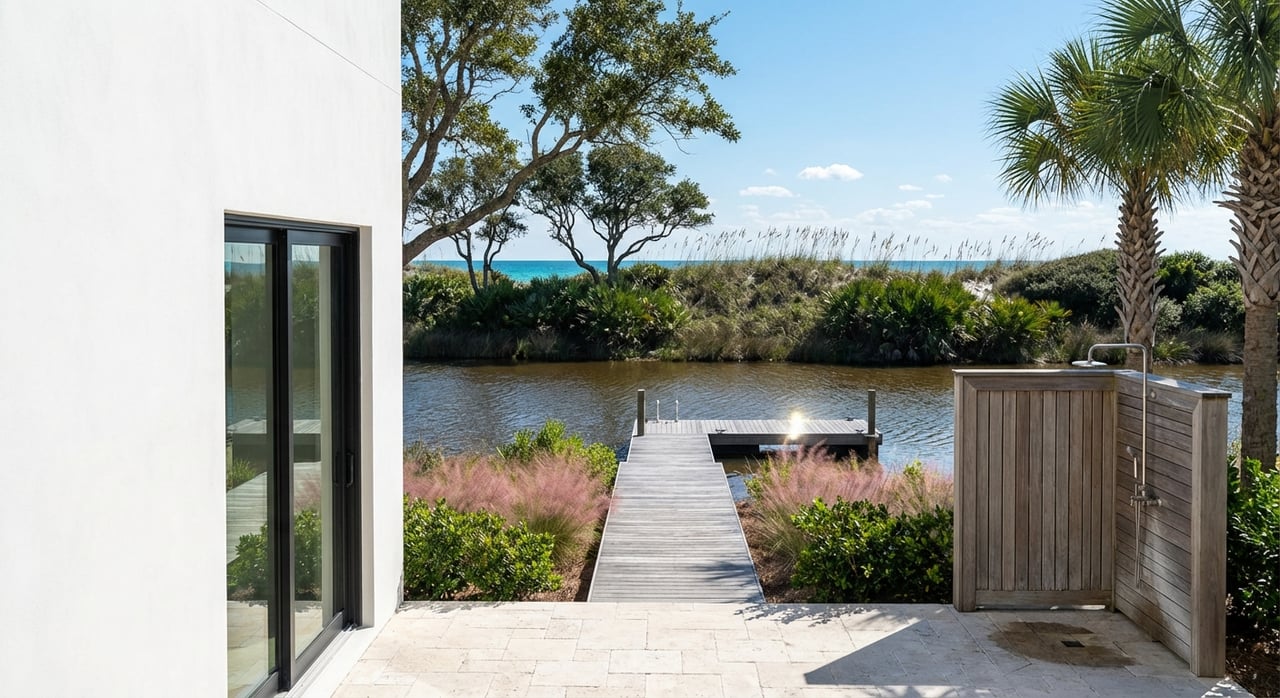
  • Lakefront cottages and modern homes that open to decks, screened porches and boardwalks.
  • Properties in master-planned communities that feature lake amenities, trails and boathouse-style conveniences. WaterColor is a well-known example with design that orients to lake access and pathways.

Permits and protections to know

Coastal Construction Control Line (CCCL)

If a parcel sits seaward of Florida’s CCCL, the state requires specific disclosures and often state authorization for construction and certain activities. Always order a survey that shows any CCCL crossing so you understand design, elevation and permitting implications. Review the relevant rules in Florida Statutes Chapter 161.

Flood zones and insurance

Coastal sites vary by elevation and exposure. Gulf-front parcels are more likely to fall in coastal high-hazard VE zones that carry stricter building standards and higher flood insurance premiums. Lakefront parcels may fall into AE or AO zones based on elevation and proximity to water. Verify the flood zone for a property using the FEMA Flood Map Service Center and request any existing Elevation Certificate. Obtain flood and wind quotes early so you can compare total carrying costs.

Docks, seawalls and shoreline work

Shoreline projects, whether on the Gulf or a dune lake, often require multiple permits. Expect local county permitting and state review, and in some cases a U.S. Army Corps permit for work in navigable waters. Timelines can be lengthy and may include mitigation or conditions. If you plan a dock, boathouse or shore protection, consult a coastal permitting specialist and review permit history in advance. A good primer on process steps is available from a regional coastal firm’s overview of riprap and shoreline permitting.

Short-term rental rules in Walton County

If you plan to rent, Walton County requires registration, a locally available responsible party and compliance with posting, parking and occupancy standards. The county has also updated renewal schedules, with changes taking effect on February 2, 2026 for many properties. Review the county’s Short-Term Vacation Rental guidance in the Walton County STR FAQ and confirm any condominium or HOA rules that apply.

Cost considerations

  • Flood and wind insurance: Premiums vary by zone, elevation, and construction features. Confirm the flood zone with FEMA’s map tool, then collect quotes from your insurers.
  • Resilience features: Elevated mechanicals, impact-rated glazing, pilings and flood-resistant finishes are common near the coast. These add to build cost and maintenance yet support insurability and long-term durability.
  • Environmental stewardship: Expect county oversight for dune and lake protection. Native vegetation, dune restoration and outfall management help preserve shorelines. The county describes protections on its Coastal Dune Lakes page.

Which shoreline fits you

  • Beach-first lifestyle: You want instant sand access, open-water swimming and sunsets. A gulf-front home or a gulf-adjacent property inside a planned community may fit best. Be ready for higher storm exposure and more permitting steps near dunes and waves.
  • Water-lifestyle and privacy: You picture quiet mornings, kayaks and birdwatching. A lakefront home on a coastal dune lake offers calm water and a more secluded feel.
  • Investor and rental focus: Gulf-front homes can command premium nightly rates. Balance that potential with STR registration requirements, insurance costs and maintenance.

How to choose with confidence

Use this due-diligence checklist to compare two specific properties side by side.

  • Pull the flood zone and FIRM panel for each parcel using the FEMA Flood Map Service Center. Request any Elevation Certificate from the seller.
  • Order a current boundary survey. If the property is near the Gulf, ensure the survey depicts the CCCL and any beach or access easements. Review Florida’s CCCL rules.
  • Ask for prior permits and approvals, including any shoreline work and past CCCL or administrative authorizations. You can also search agency records through the Florida DEP index.
  • Confirm utilities and flood information with the county, including sewer versus septic, and request any available data through the county’s Request Flood Information page.
  • If you want a dock or boathouse, schedule a pre-application consult and review historical permits. A process overview is here: riprap and shoreline permitting.
  • Verify Walton County short-term rental registration, posting and parking requirements for your exact address using the STR FAQ, and cross-check HOA rules.
  • For lakefront, review county resources on lake protection and public ramps to understand neighborhood context and privacy. Start with Walton County’s Coastal Dune Lakes page and the county map resource.

Ready to compare specific Santa Rosa Beach homes and run the numbers on insurance, STR rules and permits for your shortlist? Our team pairs lifestyle guidance with disciplined due diligence so you can buy with confidence. Connect with Coastal Heritage Realty to Schedule Your Complimentary Consultation.
FAQs

Will a Gulf-front home always cost more than a lakefront home in Santa Rosa Beach?

  • Not always. Gulf frontage often commands a premium, especially in gated or planned communities, yet lakefront homes in top neighborhoods can equal or exceed those prices depending on lot, privacy and finishes. Verify with current MLS comparables for your submarket.

Do I need flood insurance for a coastal dune-lake home on 30A?

  • Possibly. It depends on your flood zone and elevation. Look up the parcel on the FEMA Flood Map Service Center and request quotes from NFIP or private providers. Many owners choose coverage even outside mapped high-risk zones.

Can I build a dock on a coastal dune lake in Walton County?

  • Often yes, but docks and boathouses require county review and can involve state permits. Start with Walton County’s guidance on Coastal Dune Lakes and confirm buffers, design standards and permit steps before you plan improvements.

What is the Coastal Construction Control Line and why does it matter for Gulf-front homes?

  • The CCCL is a state regulatory boundary near the beach. Building or certain activities seaward of the line typically require state authorization and specific design standards. Always obtain a survey that shows the CCCL and review Florida Statutes Chapter 161.

Where can I learn about public access and protections for specific dune lakes?

Ready to take the next step?

Buying or selling a home is a major milestone, and you deserve a team that truly listens and understands your needs. We take a personalized approach to every client, ensuring that your experience is smooth, stress-free, and successful.